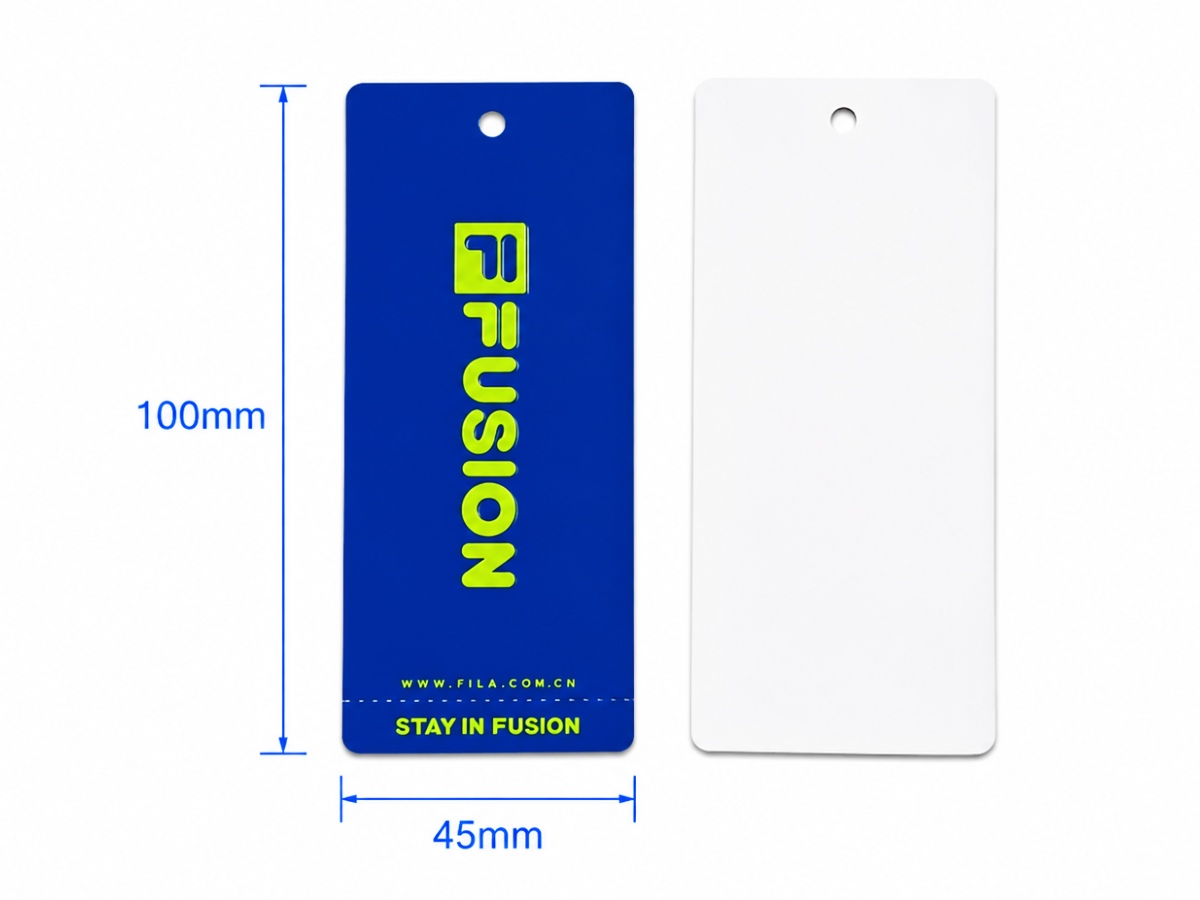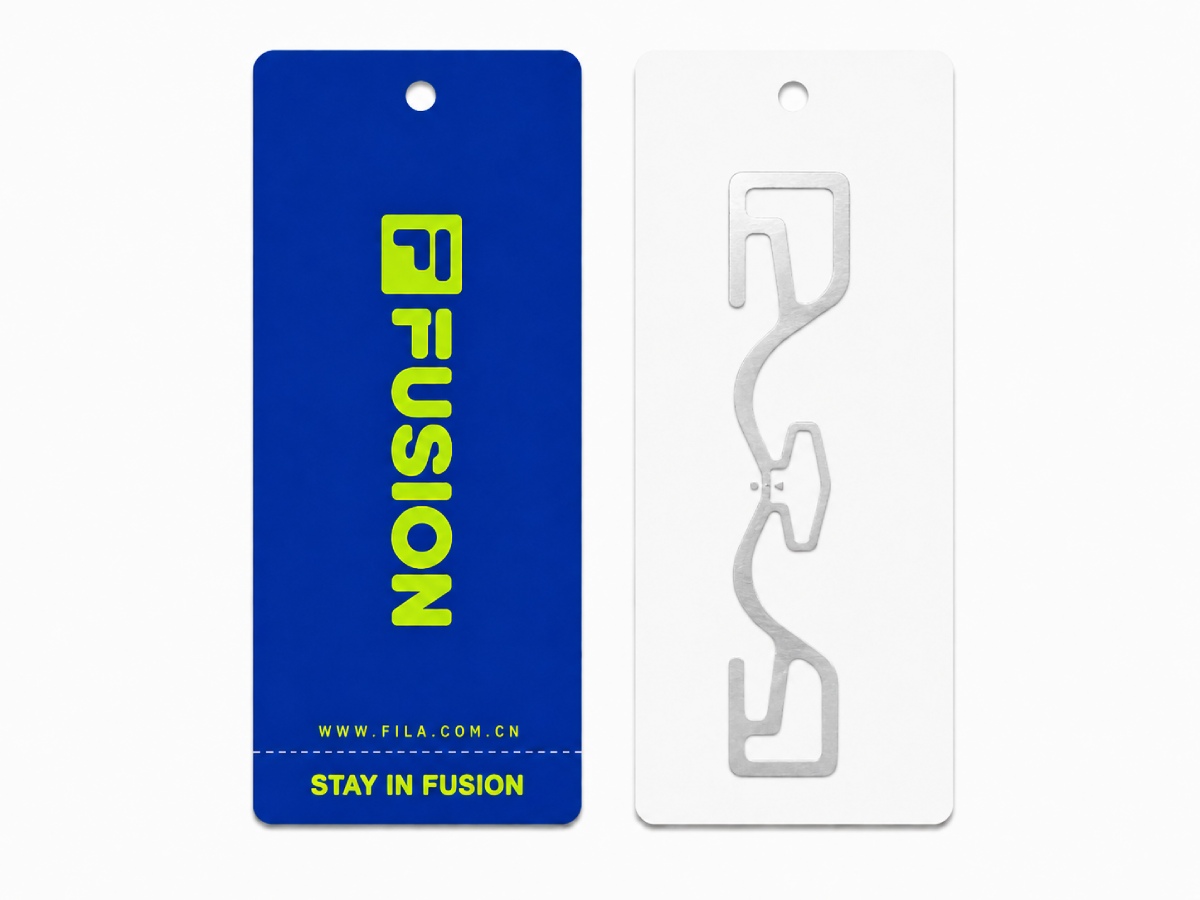
RFID Single Hangtag Introduction
These hangtags include sizes, regional prices, 1D codes, traceable QR codes,eco-labels and RFID tags. Fixed graphics are printed uniformly, while barcodes,prices and RFID data are variable per piece, realizing combined static printing, variable coding and RFID read-write functions.
Industry Pain Points of Printing Factories
Against the backdrop that RFID adoption exceeds 62% in the apparel and footwear industry, why are printing factories struggling more with RFID hangtag orders and facing shrinking profit margins? What solutions can boost competitiveness?
For printers, the main challenge of RFID hangtag orders lies not in printing itself, but fragmented workflows and runaway costs. In conventional processes, tag printing, chip encoding and data verification are handled separately. This creates extra communication and material transfer steps, and frequently triggers mismatched or missing chip data, leading to rework and high scrap rates. Coupled with rigid minimum order quantities, many small-batch, high-margin orders have to be turned down. The end result: plenty of orders, yet profits eaten up by cumbersome processing.
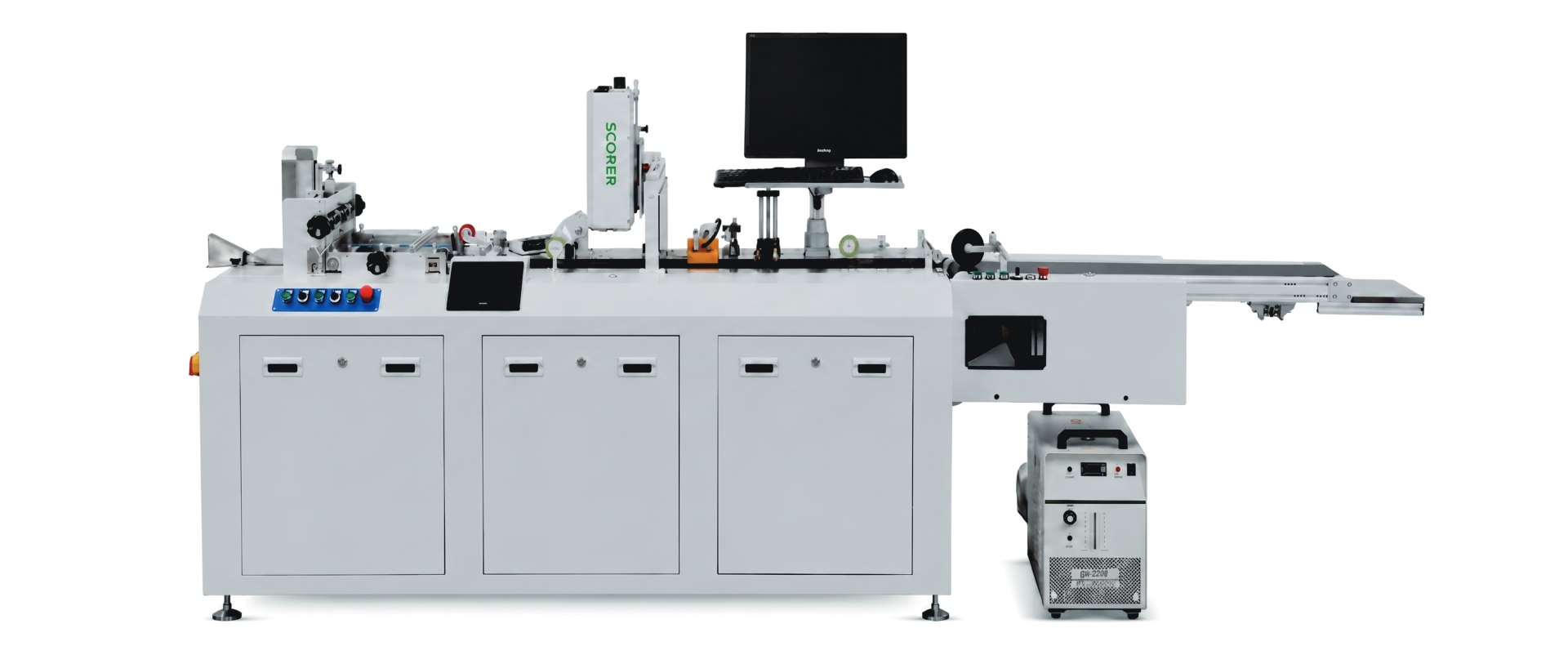
SR21 RFID Variable Inkjet Integrated Machine Solution
The SR21 integrated RFID variable inkjet machine is tailor-made for printing plants. It deeply integrates RFID read-write modules with the printing system to simultaneously print barcodes, price marks and QR codes, while encoding and verifying RFID chips in one single pass. No plate-making is needed, cutting process-related expenses and data error risks from the source. It also supports flexible production with no minimum run requirements. Printers can reliably take on small-batch, multi-SKU, high-profit RFID hangtag jobs, slash labor and scrap costs, and turn RFID orders into steady profits.